Parent app
Live on iOS and Android.

Finnish for "alongside"
rinnalla coaches families from birth through third grade — building the foundational skills before school starts, and reinforcing your instruction after the day ends.
Kindergarten teachers will tell you the same thing, and they are saying it more every year: children are not showing up ready.
So the year gets spent filling gaps instead of moving forward with grade-level content. Then first grade fills gaps. Then second. Then third — the year you are measured on, and the year that decides whether a child reads.
The gaps do not close on their own. They compound. And by the time a child reaches you, the window where those foundational skills are built most naturally has already passed.
Fourth graders reading at or above NAEP Proficient in 2024, down from 33% in 2022 and 35% in 2019.
National Assessment of Educational Progress, 2024
Fourth graders scoring below NAEP Basic — the largest share since 2002.
National Assessment of Educational Progress, 2024
Parents who teach specific foundational literacy skills are six times more effective than parents encouraged simply to read aloud — regardless of family income.
Sénéchal, M. (2006). National Center for Family Literacy / National Institute for Literacy. · See the 6× research →
Fourth grade is the first national measure taken after the third-grade window closes. It tells us what the years before it produced.
Districts have invested heavily and appropriately in teacher knowledge, curriculum, and intervention. That work matters and it is not finished. But it operates on roughly six hours a day, in a building children do not enter until they are five.
The research behind the 6× finding is well established. Whether rinnalla helps parents put it into practice — and whether that moves outcomes at your scale — is what we're finding out together, in partnership with the districts and evaluators who use it.
The 6× finding is why the home matters. Information isn't the lever. Coaching is.
The pre-reading skills the science identifies as most critical — oral language, phonological awareness, print knowledge, vocabulary — do not require a classroom. They are built in everyday moments between a parent and a child.
What they require is a parent who knows what to do in the moment.
rinnalla provides the just-in-time coaching that makes it possible.
Grounded in the science of reading
Speaking, listening, and using complete sentences to express ideas.
Hearing and manipulating the sounds in spoken words.
Connecting letters and sounds to decode written words.
Reading with accuracy, pace, and expression.
Knowing what words mean and how they're used.
Building meaning from text in real time.
No training required. No jargon. No family literacy night to drive to. No device time for the child. Just brief, daily coaching designed to fit real family life.
Simple questions about their child's age, what they've noticed, what they want to work on. Built for families from birth through third grade.
A brief explanation of one foundational skill in plain language. Why it matters for reading. How it complements classroom instruction.
Something they can do in the next ten minutes, with language that makes it feel like play, using materials they already have.
Watch, cue, practice, reflect. Every cycle is personalized to the child and adjusts as the child grows.
Everyday moments
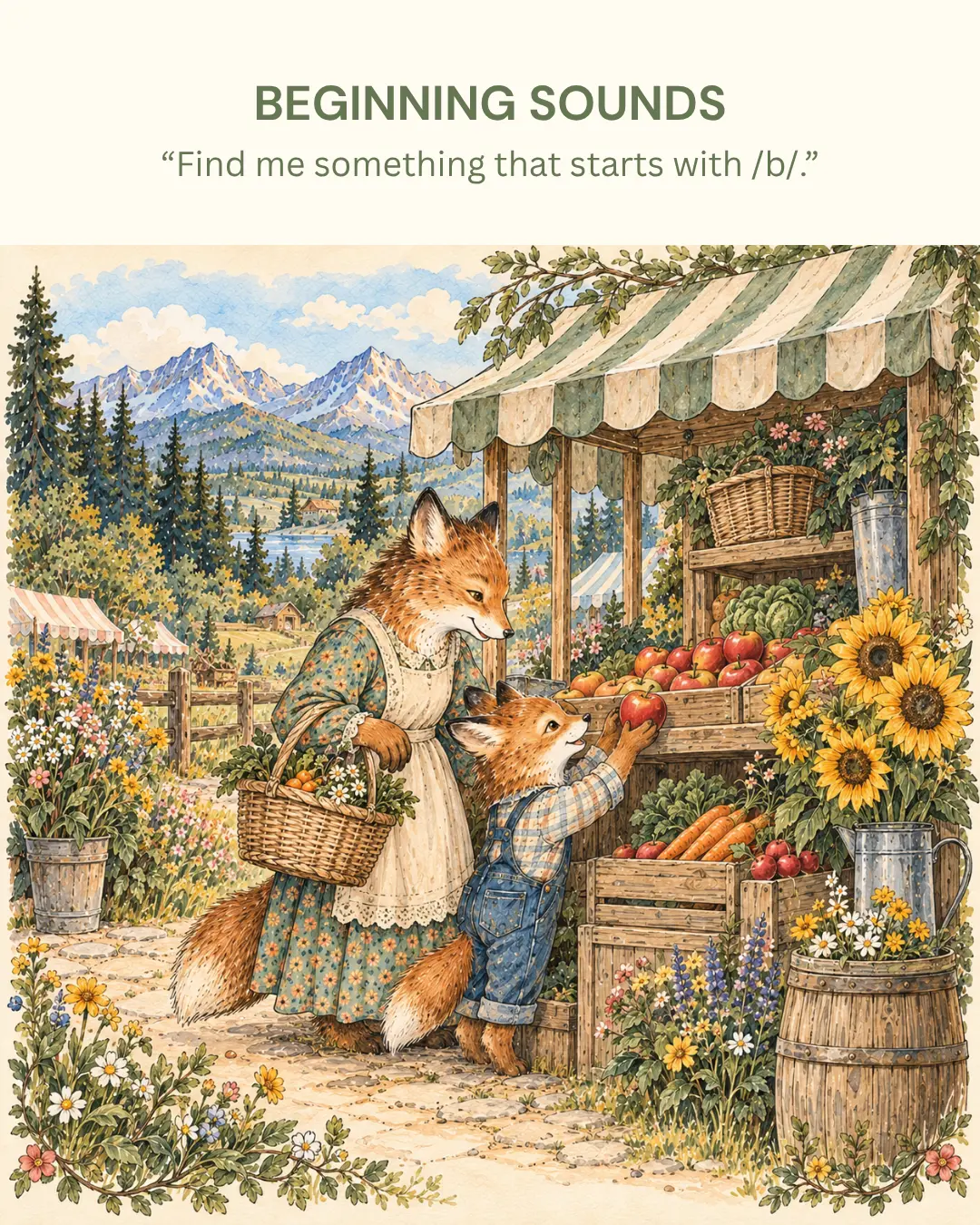
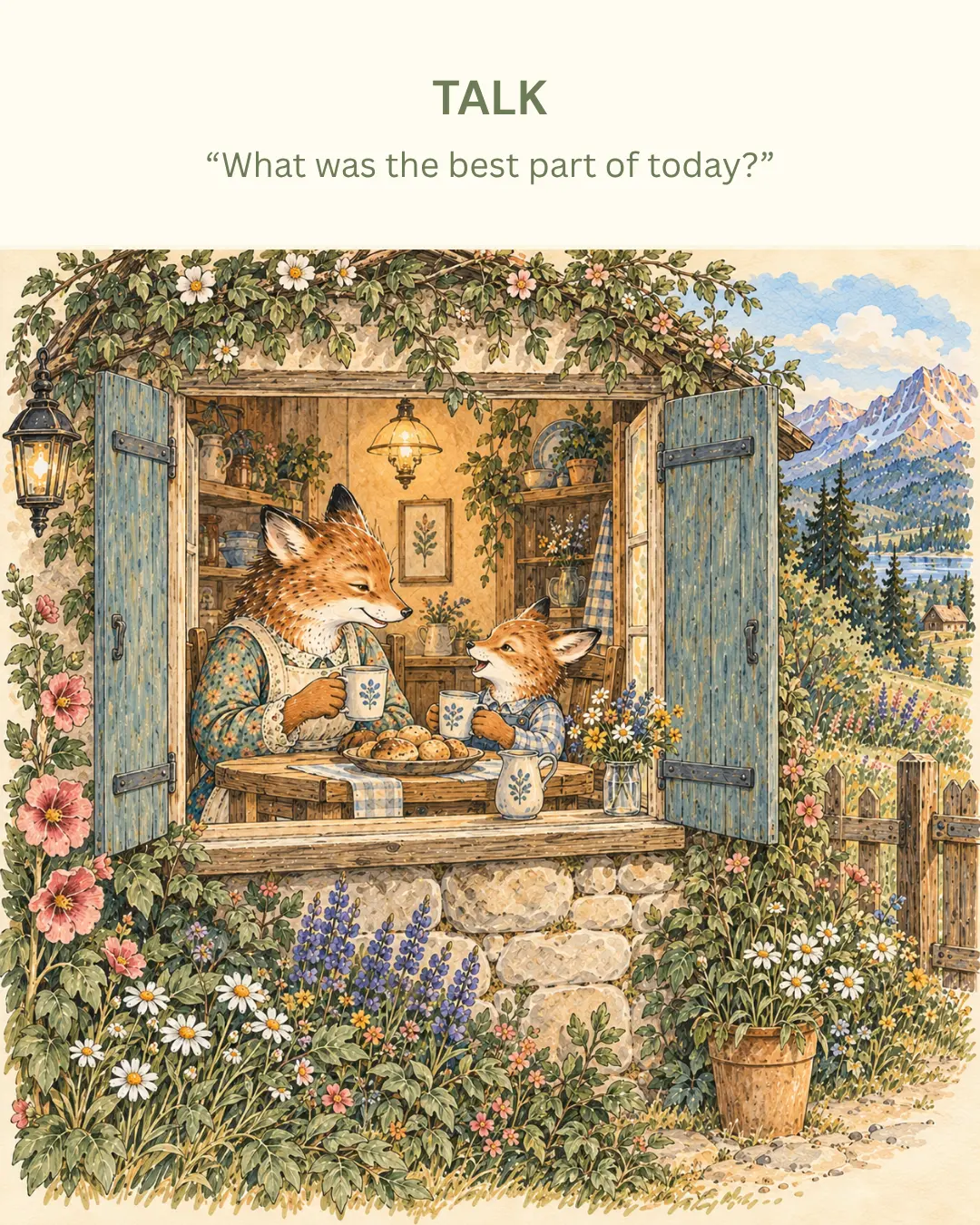
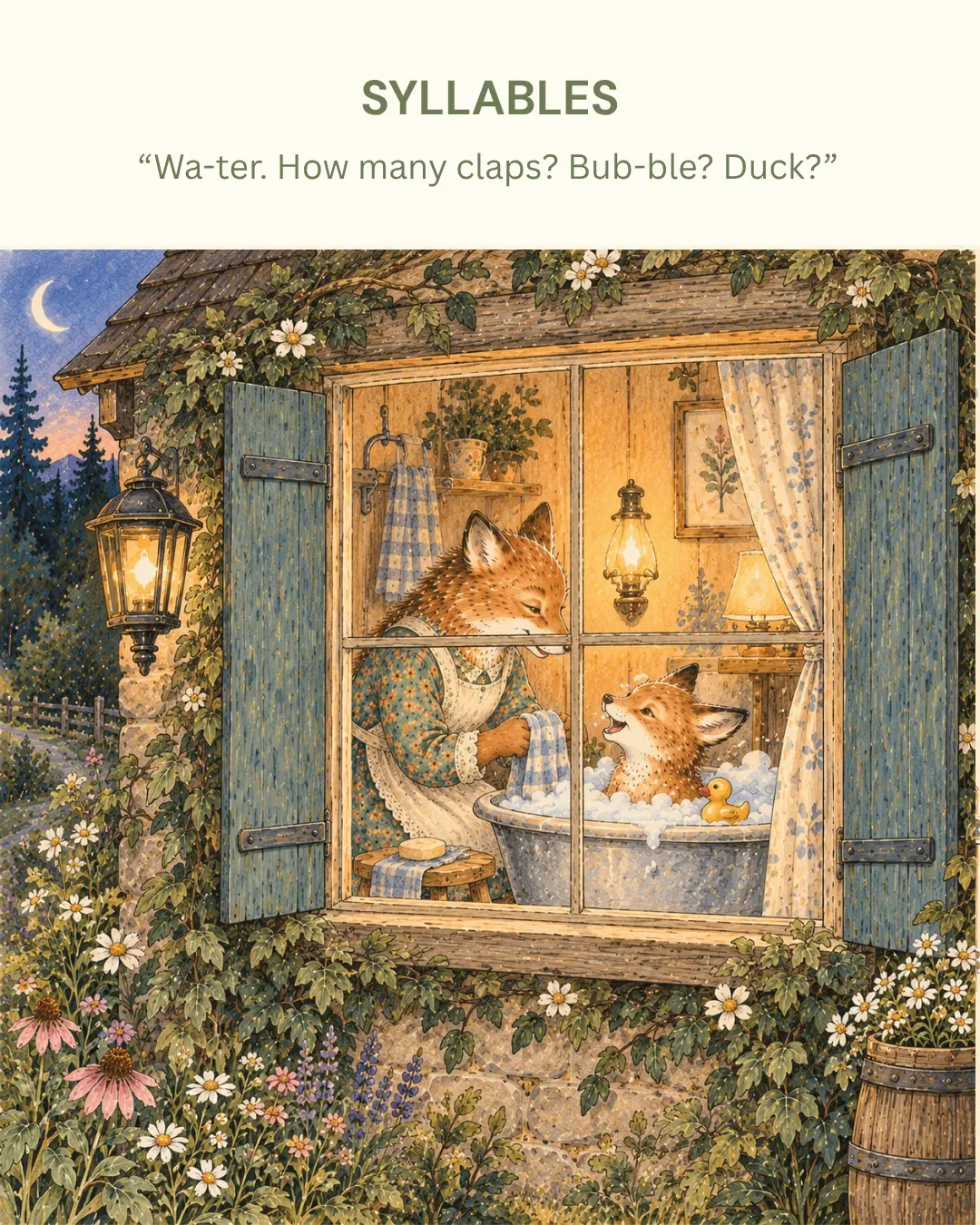
Bath time, the drive to town, breakfast at the table — rinnalla turns small windows into brief, playful practice of the same foundational skills their child is learning at school.

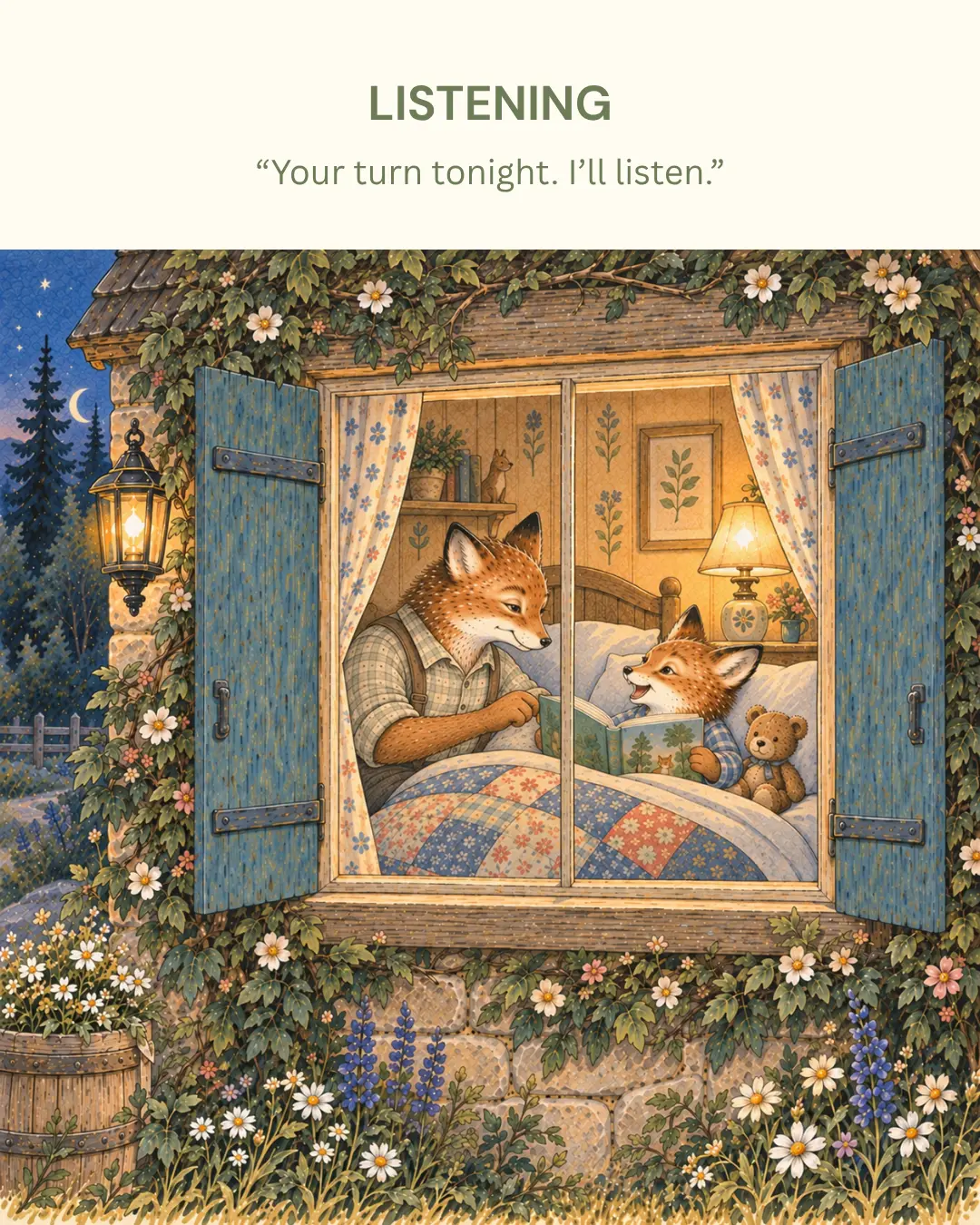
The books are already going home
Schools, libraries, and literacy organizations send millions of books into homes every year. Those are worthwhile investments. They are also only half of the equation.
A book on the kitchen table doesn't tell a parent what to do with it — which sounds to play with, what to ask, when to pause and let a child finish the sentence. Most parents were never shown. And reading aloud on its own is not what the research says moves outcomes most.
rinnalla is the coach that shows up where parents already are: at home, on their phone, in the two minutes they actually have. It turns the book you already sent home into practice that builds the same skills your teachers are teaching.
The parent report
Parents are increasingly asked to participate in reading plans for struggling readers. But "required to participate" and "equipped to contribute" are not the same thing. Too often a parent sits at the edge of the meeting, overwhelmed by a conversation happening around them.
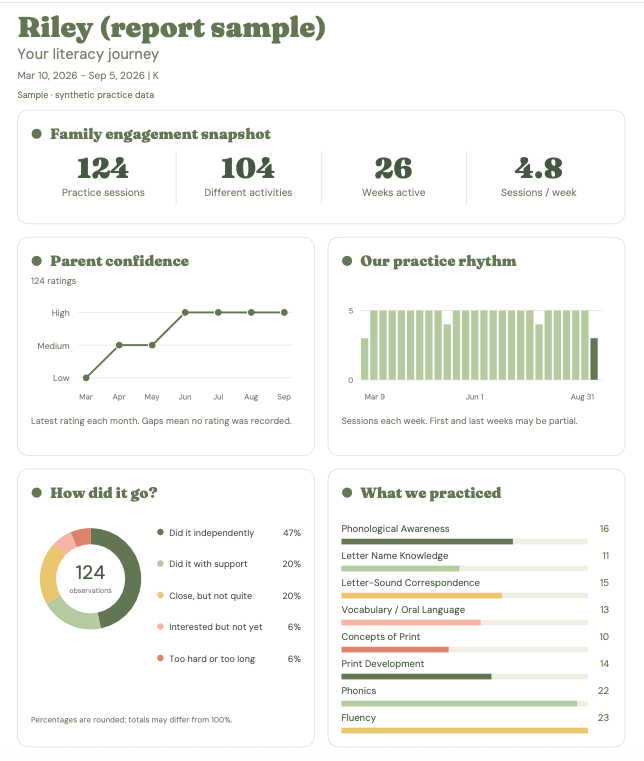
With rinnalla, parents can download a simple report of what they've practiced at home and bring it to the table. It shows practice sessions and activity counts, the parent's confidence tracked month by month, the family's weekly practice rhythm, and the parent's own observations of how practice went — broken down across eight skill areas: Phonological Awareness, Letter Name Knowledge, Letter-Sound Correspondence, Vocabulary/Oral Language, Concepts of Print, Print Development, Phonics, and Fluency. They arrive with evidence and insight, ready to help shape the plan.
To be plain: these are parent observations, not an assessment or a mastery score. That is exactly what makes them useful — it's the home side of the picture, in the parent's own hand.
A shared record between home and school
Educators see what's really happening at home, not a guess.
Parent participation with substance
A concrete way a family meets its role in the plan.
A confident contributor
Parents walk in knowing what they've done and what they've noticed about their child.
Live on iOS and Android.
Coming soon.
The complete app experience is available in Spanish.
Links and printable cards families can use the same day.
Pair rinnalla with books you already distribute, including family workshops that send parents home ready to use them.
Districts and organizations typically fund rinnalla through existing family-engagement, literacy, and book-distribution budgets.
We're glad to help you identify the right pathway for your context.
Built on trust
rinnalla collects the minimum a coaching app needs to do its job. When a parent and child finish an activity together, that activity is recorded — that is what makes the parent's report possible and what gives your team the participation dashboard. That is what the data is for, and that is all it is for. We do not collect student outcome data. We never sell personal information, we never use it for advertising, and we never build advertising profiles of children. Don't take our word for it — read the documents your privacy and procurement teams will ask for.
Start here — a plain-language summary of what we collect, what we don't, and how it's protected.
Download PDFThe complete policy set: privacy policy, data map, security policy, retention, and breach response.
Download PDFSchedule of student data for school districts and contracting organizations.
Download PDFQuestions about privacy or procurement? Reach us at privacy@rinnallaliteracy.com.
Families download in seconds — no account setup, no login codes, no paperwork.
Download rinnallaMarci Houseman is the founder of rinnalla. She spent thirty years in education as a teacher, turnaround principal, and statewide literacy implementation leader, and serves on her state board of education's science of reading advisory panel. She takes these conversations herself.